From a Melbourne app studio to plain-English automation
Autonome has been taking the manual work out of businesses since 2020. First by building apps and automations by hand for each client, then with low-code, then as a product, and now with AI that drafts the workflow from a sentence.
- 2020A Melbourne studio building apps and automations by hand
- 2022Custom low-code web and mobile apps, built in weeks on Bubble
- 2025A white-labelled client portal joining Google Drive and Teams
- 2026AI that builds the workflows the team used to build by hand
- 2026+From original architecture to Cloudflare OS
2020
The launch
A Melbourne studio building apps and automations by hand
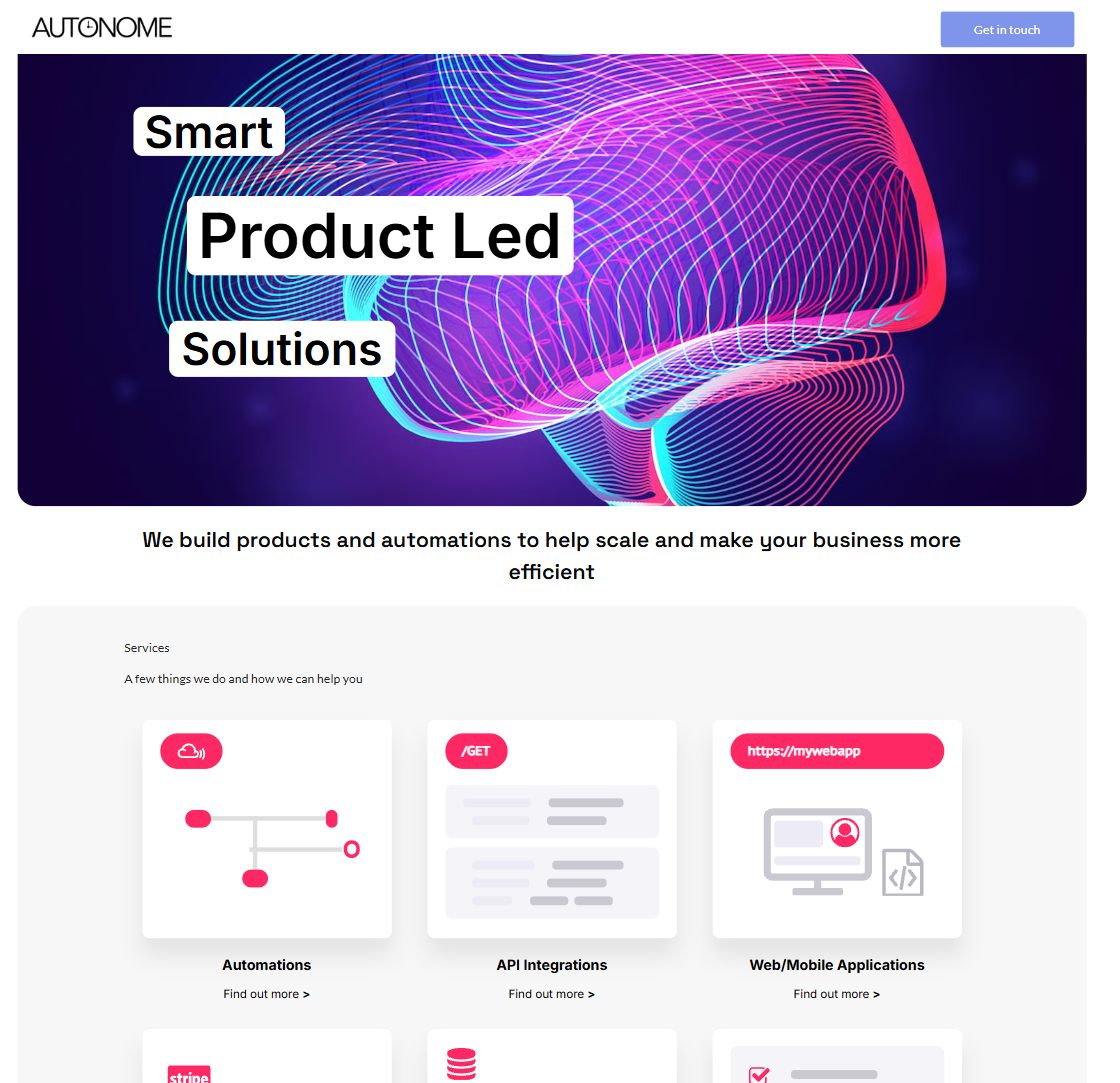
The website in 2020
See the whole page (3 more captures)
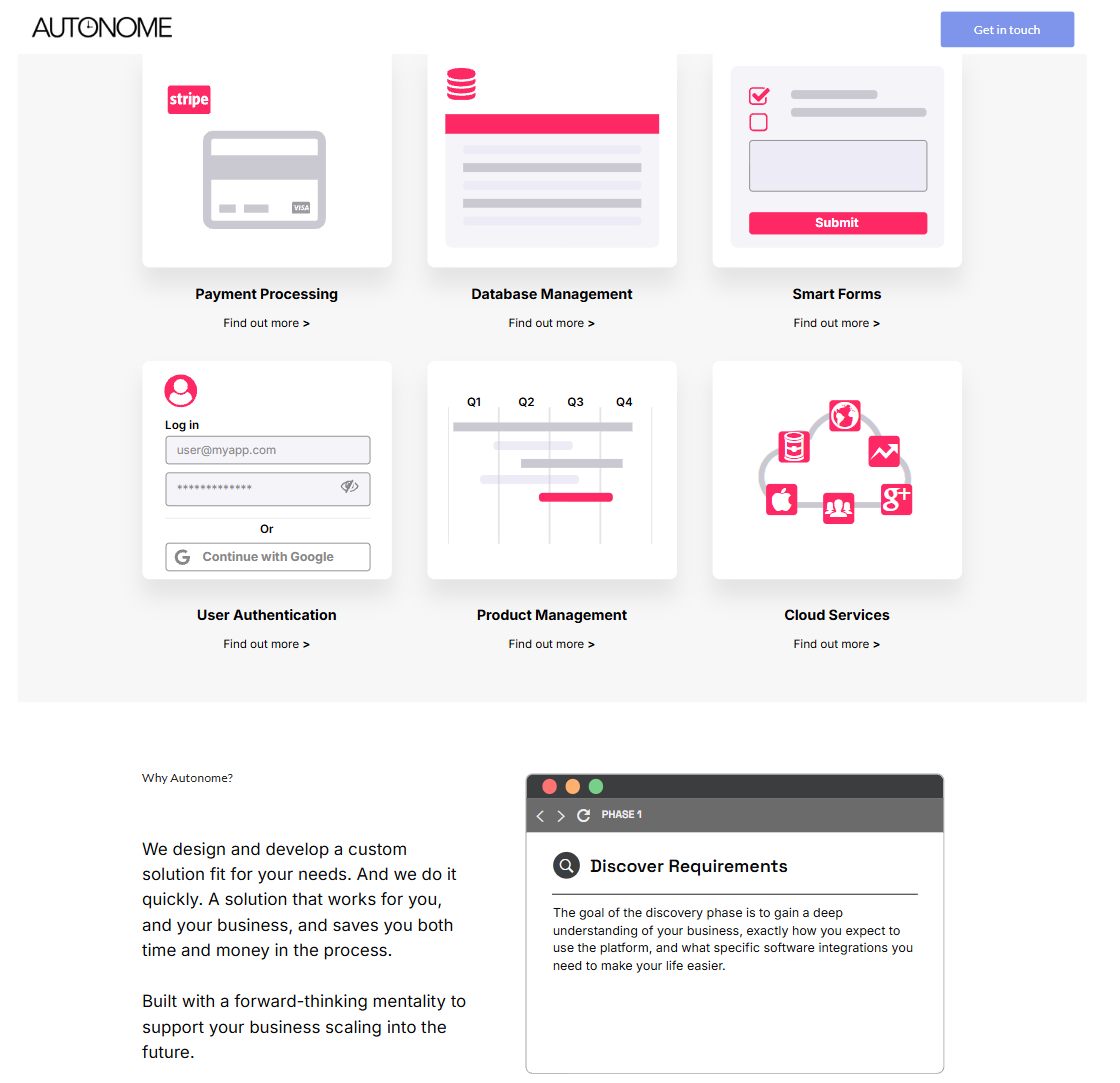
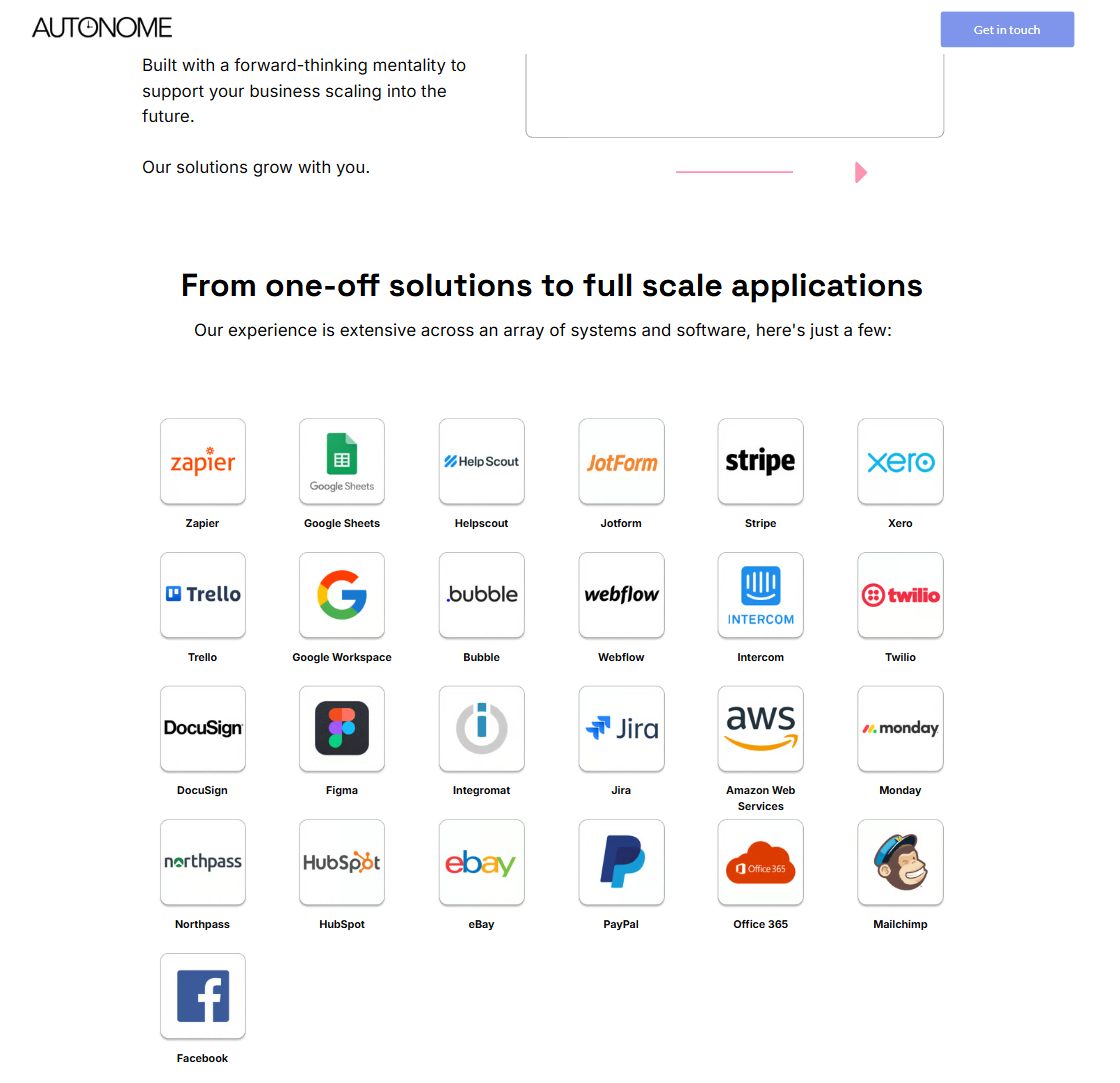
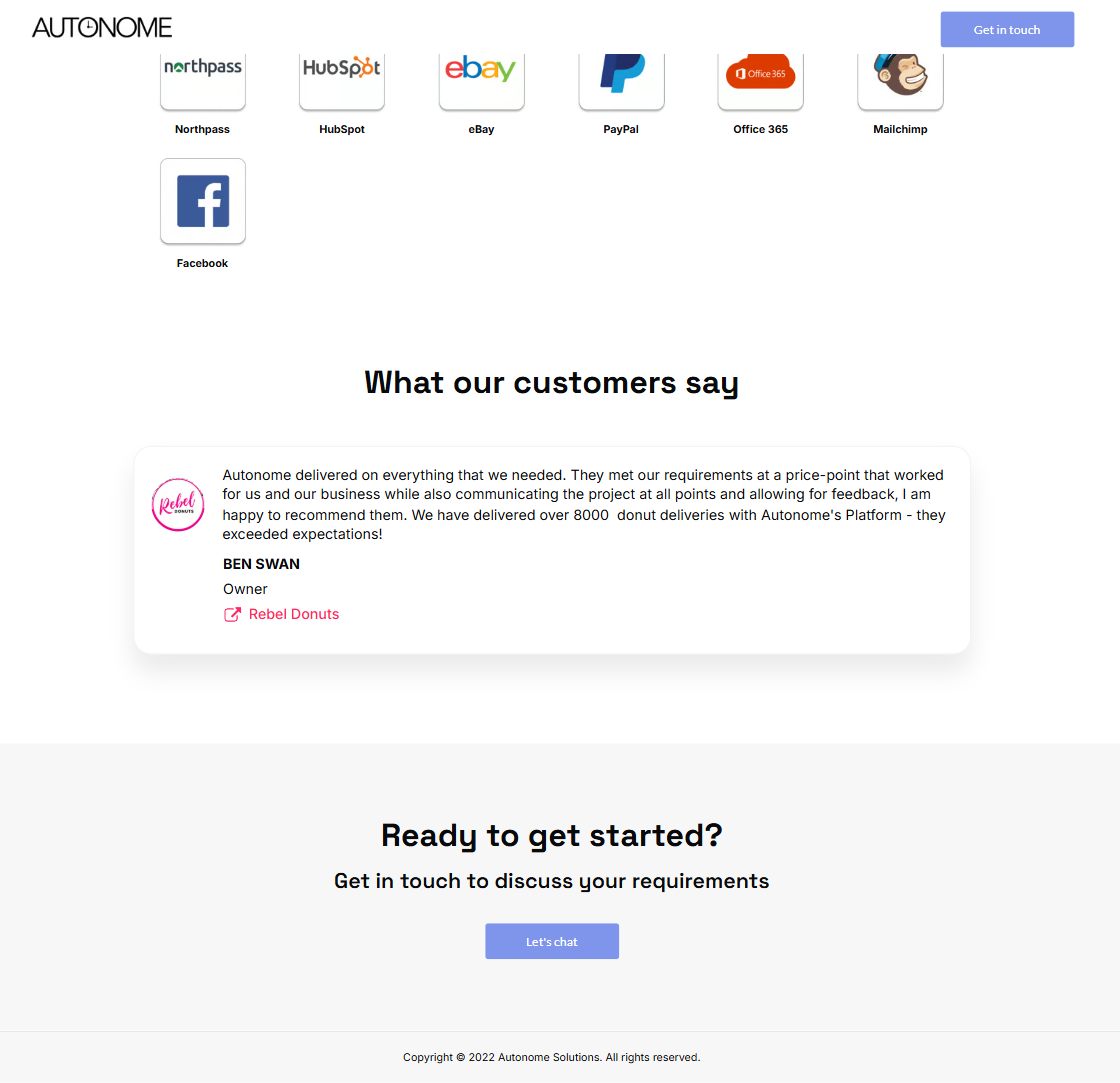
Autonome started in Melbourne in 2020 as a small product studio. Most businesses already paid for good software. What slowed them down was the manual work in between: copying orders, chasing forms and re-typing the same details into three systems. Autonome connected those tools, built the apps that were missing, and took that work out of the middle.
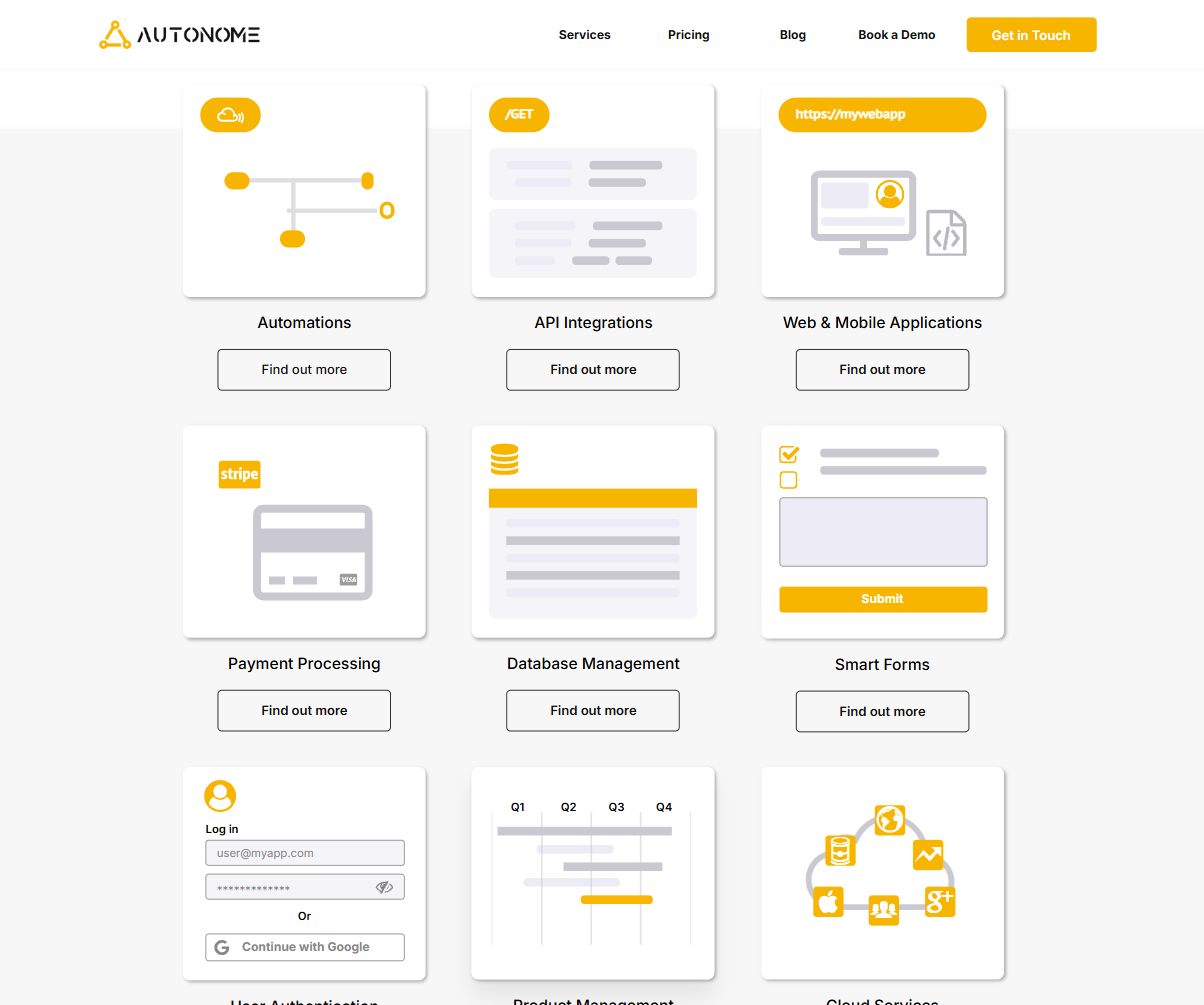
The first website said it plainly: “We build products and automations to help scale and make your business more efficient.” It listed nine services and twenty-five tools the studio had worked with, from Zapier and Stripe to Xero, HubSpot and eBay. One of the first builds was a delivery platform for Rebel Donuts, which went on to carry more than 8,000 orders.
Every one of those builds started from a blank page. The next question was how to build them faster.
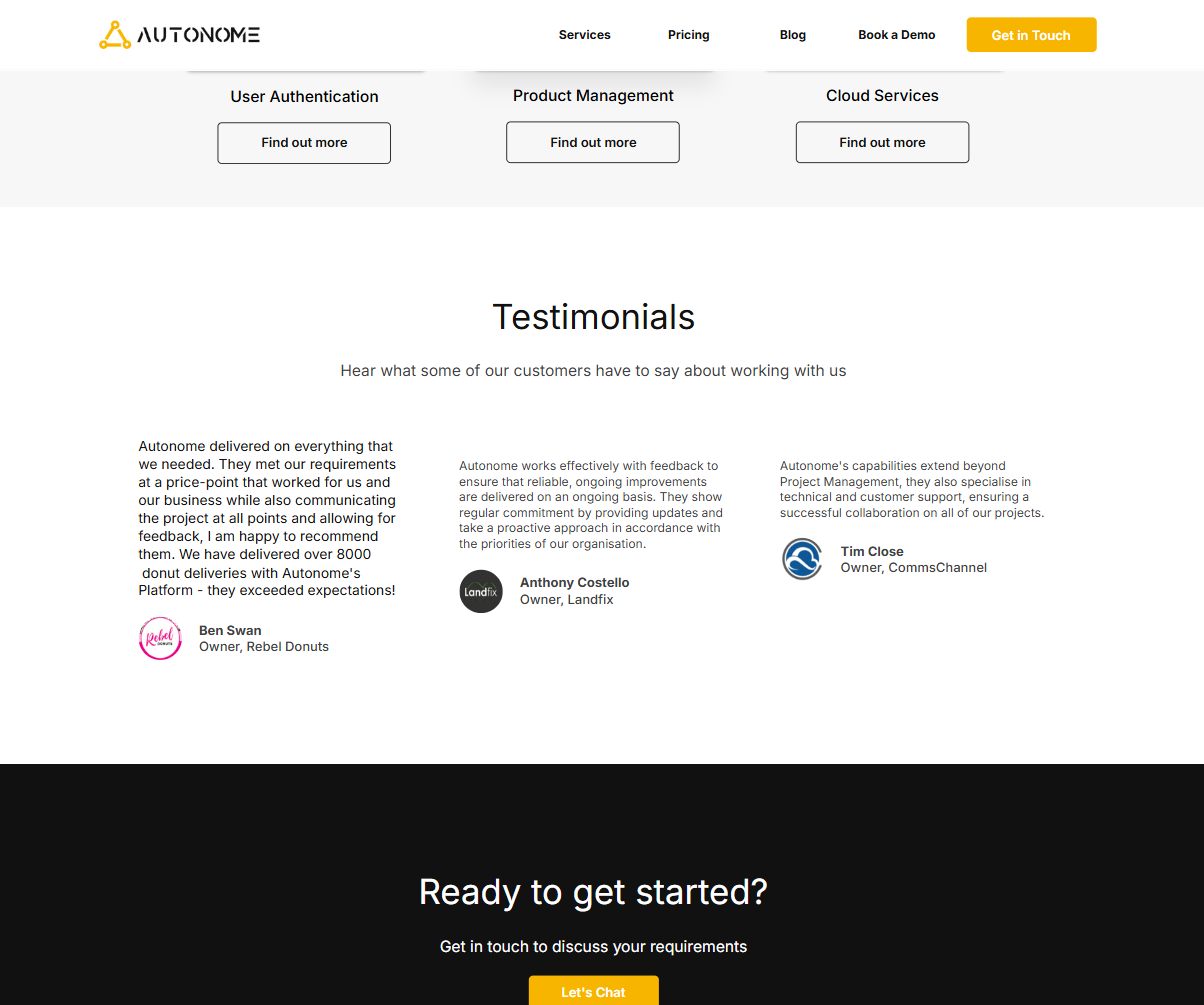
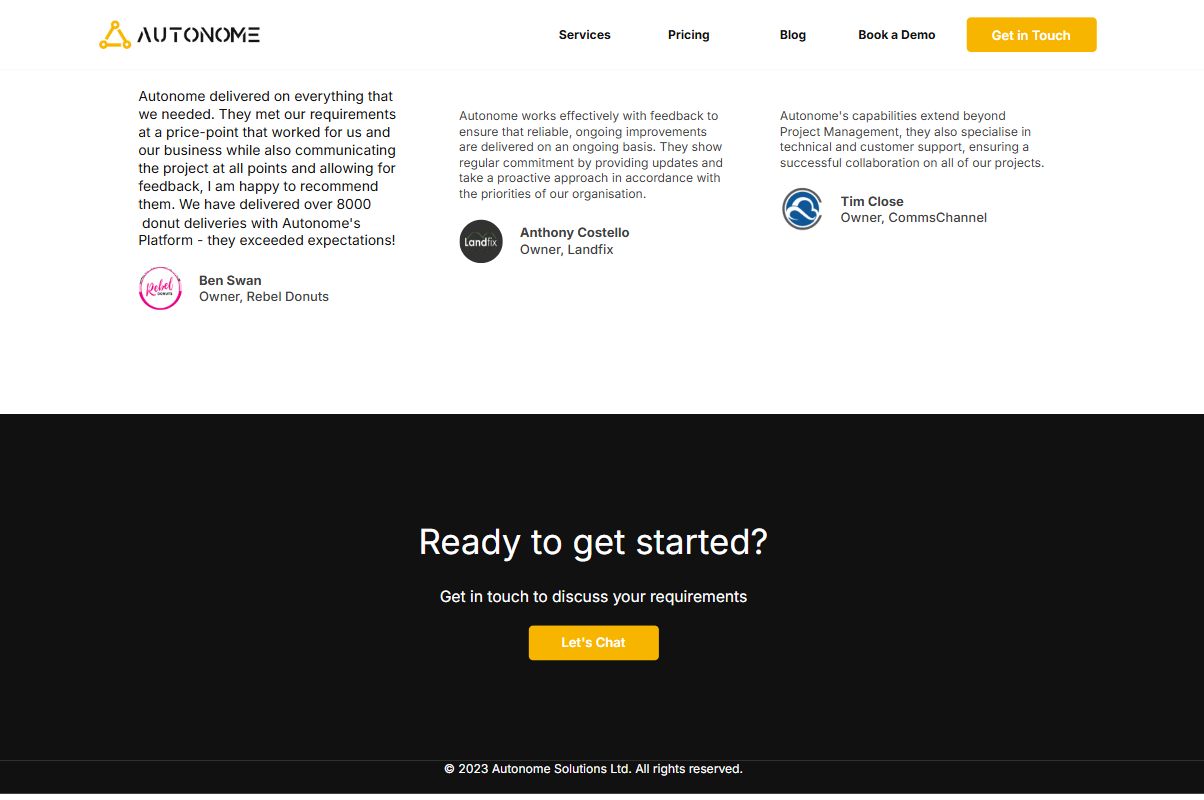
“We have delivered over 8000 donut deliveries with Autonome's Platform - they exceeded expectations!”
- What it did
- Automations, API integrations, web and mobile apps, payment processing, databases, smart forms, sign-in, product management and cloud services.
- How it worked
- A discovery phase first, to learn exactly how the business ran, then a custom build that could grow with it.
2022
2022 to 2025
Custom low-code web and mobile apps, built in weeks on Bubble
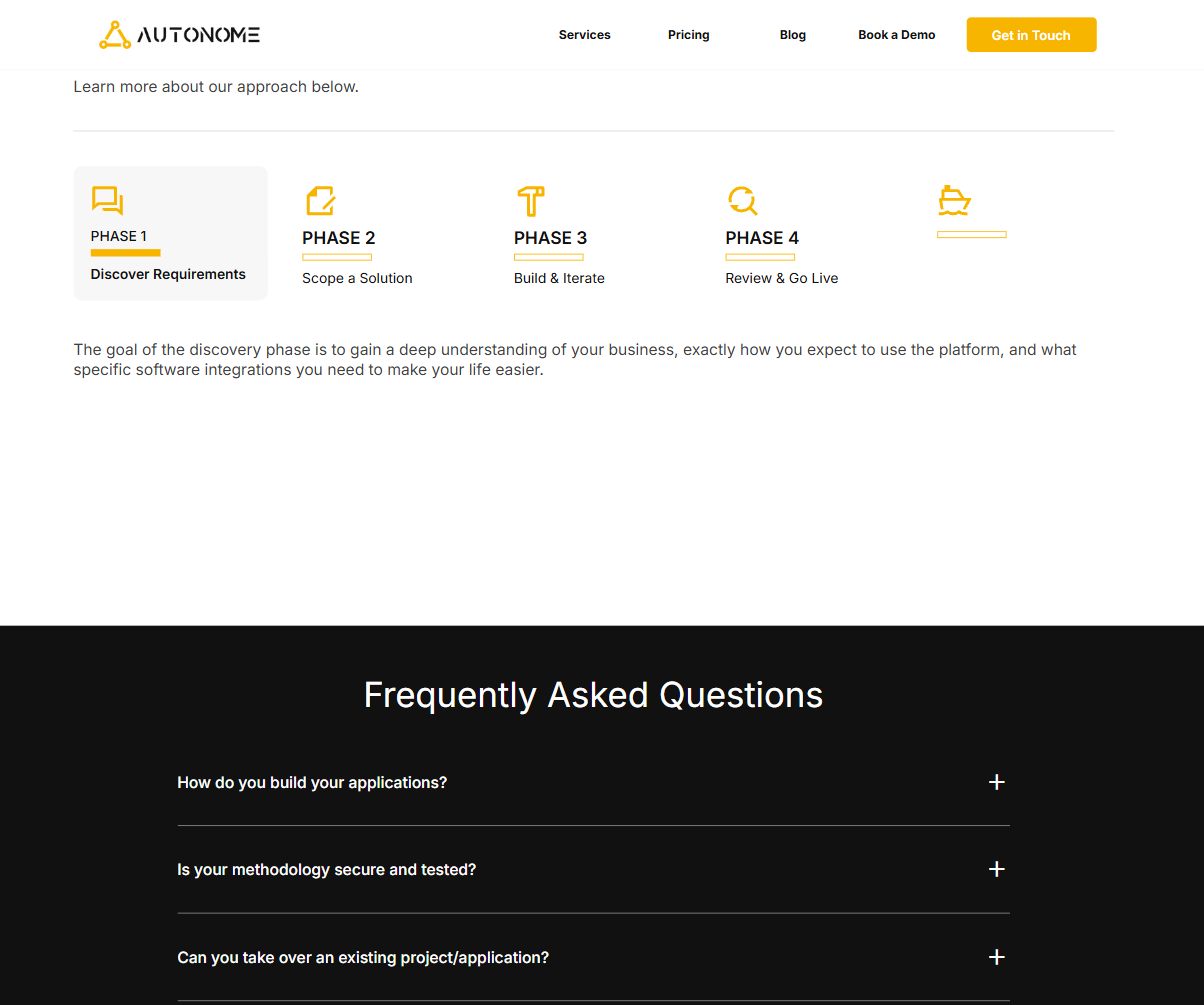
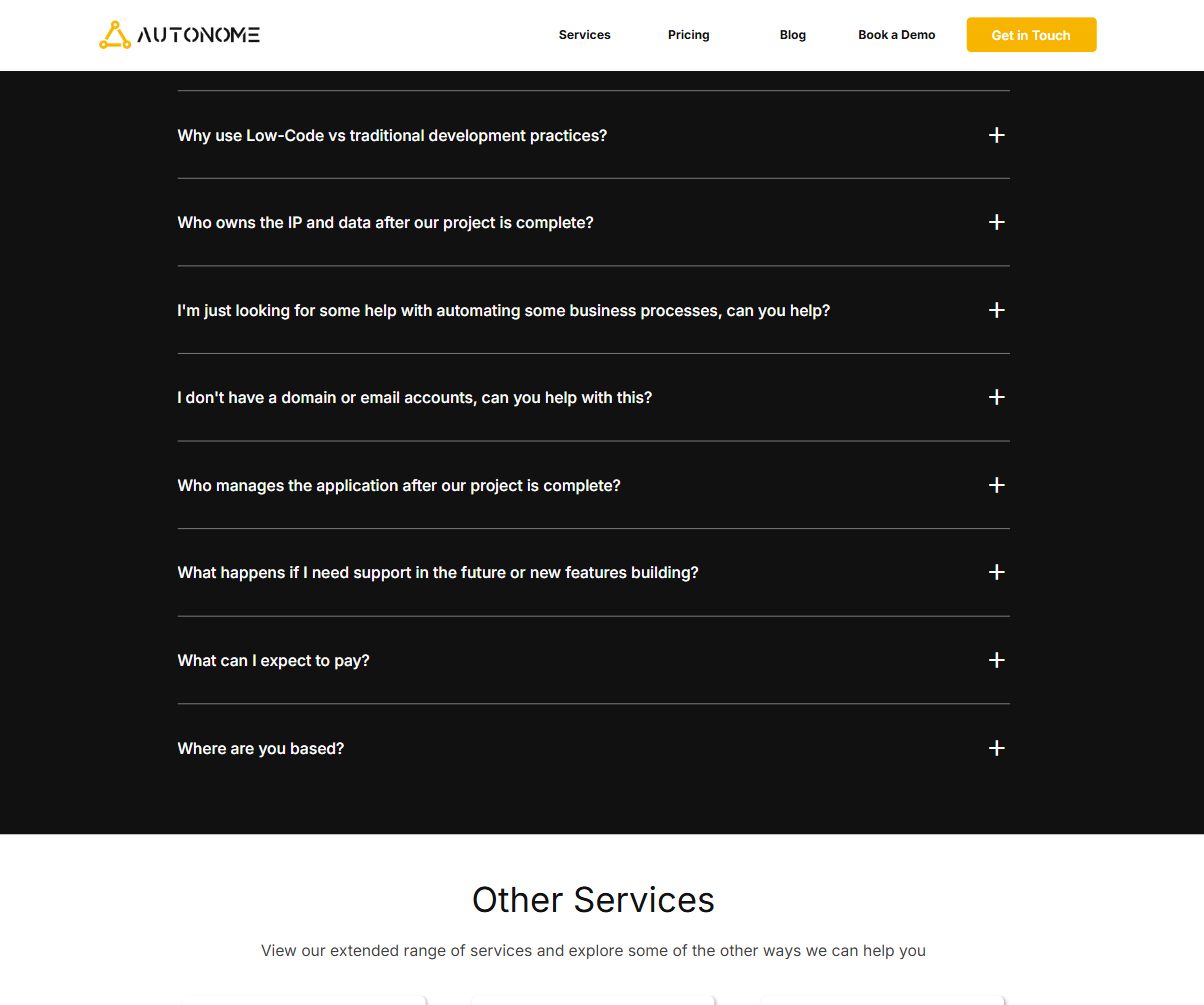
The website in 2023
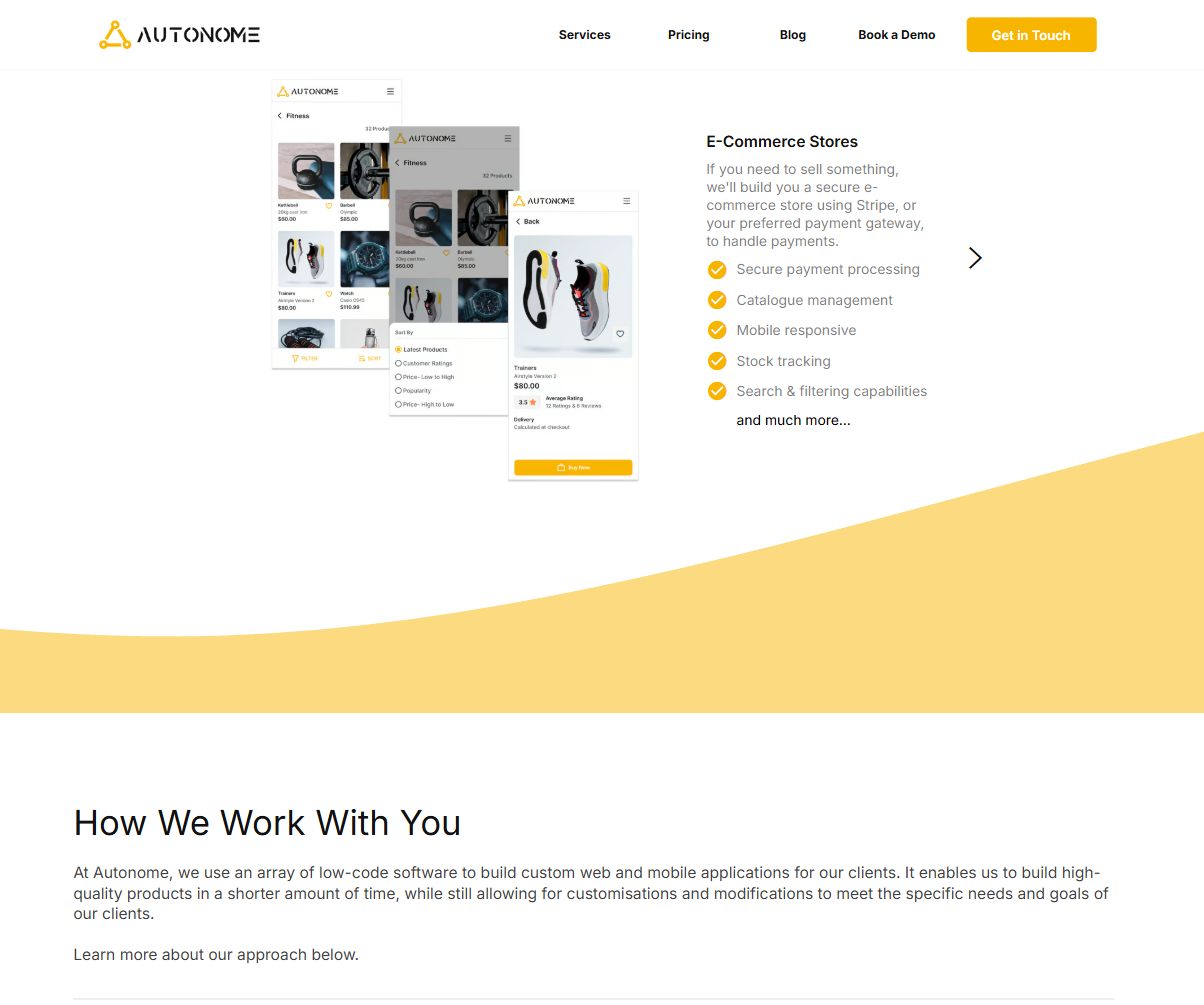
See the whole page (6 more captures)
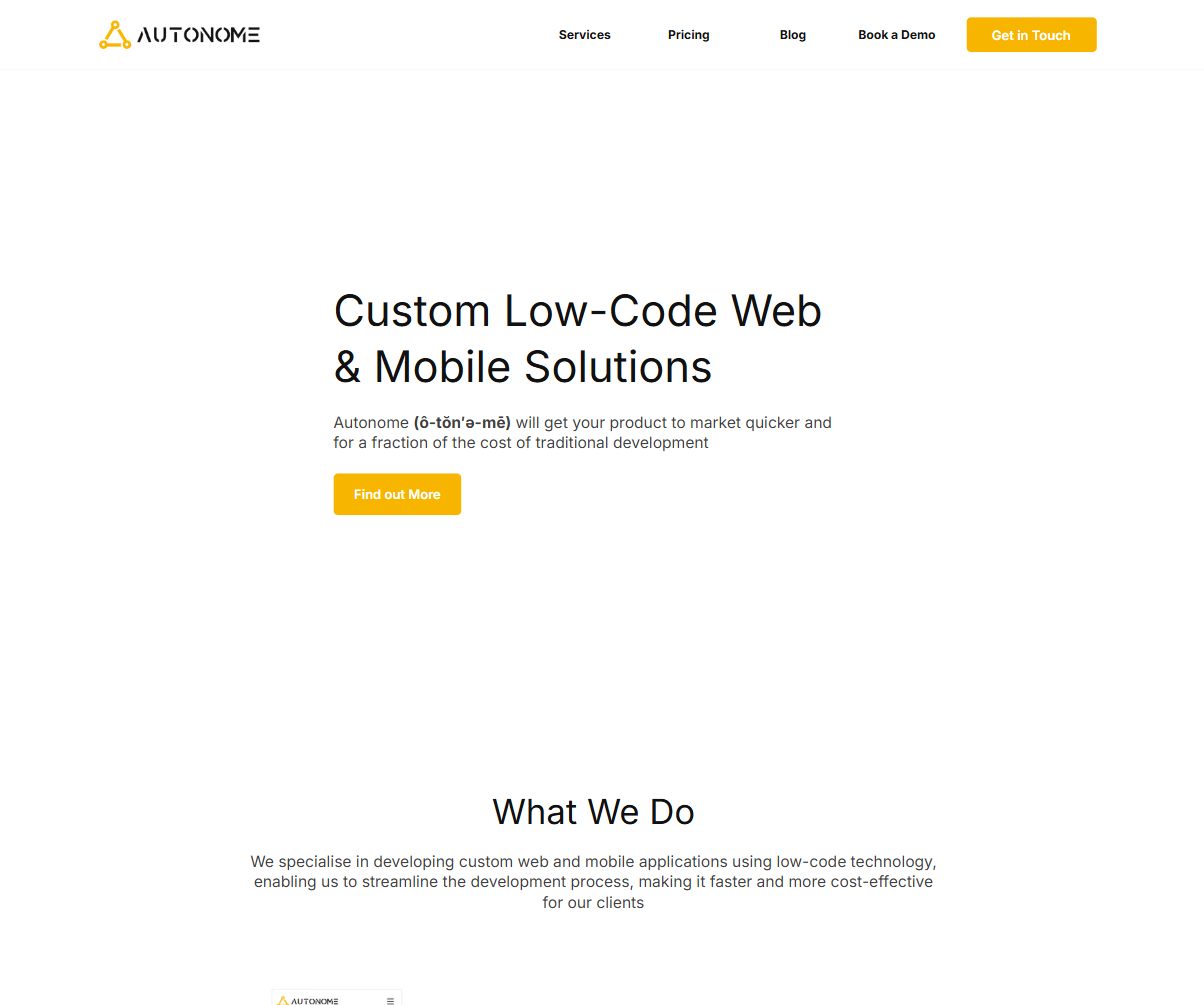
By 2022 the answer had a name: low-code. Nearly everything was built on Bubble, the visual programming platform, so a client's app took weeks instead of months and cost a fraction of a traditional build.
The work widened to e-commerce stores, admin dashboards, web apps, installable progressive web apps and the automations between them. Behind the website sat projects like CommsMobile, a SIM provisioning platform on the Telstra wholesale network, and a health and wellbeing platform connecting patients with practitioners in more than one currency.
Every project ran through the same four phases: discover the requirements, scope a solution, build and iterate, then review and go live. After years of building the same kinds of connections for different clients, the next step was to turn them into a product.
“Autonome works effectively with feedback to ensure that reliable, ongoing improvements are delivered on an ongoing basis. They show regular commitment by providing updates and take a proactive approach in accordance with the priorities of our organisation.”
- Where
- “We're based in Melbourne, Australia. Although most of our clients operate in Australia, we've helped clients from across the globe.”
- What it cost
- Automations from a few hundred dollars each; sophisticated one-off web apps for start-ups from $5,900 AUD; multi-business projects in the tens of thousands.
- Who owned it
- “Microsoft owns Microsoft Word, but does not own the books written with it.” The client owned their app, their design and their data.
- Clients who said so
- Rebel Donuts, Landfix and CommsChannel.
2025
2025 to 2026
A white-labelled client portal joining Google Drive and Teams
The Autonome 1.1 website
See the whole page (5 more captures)
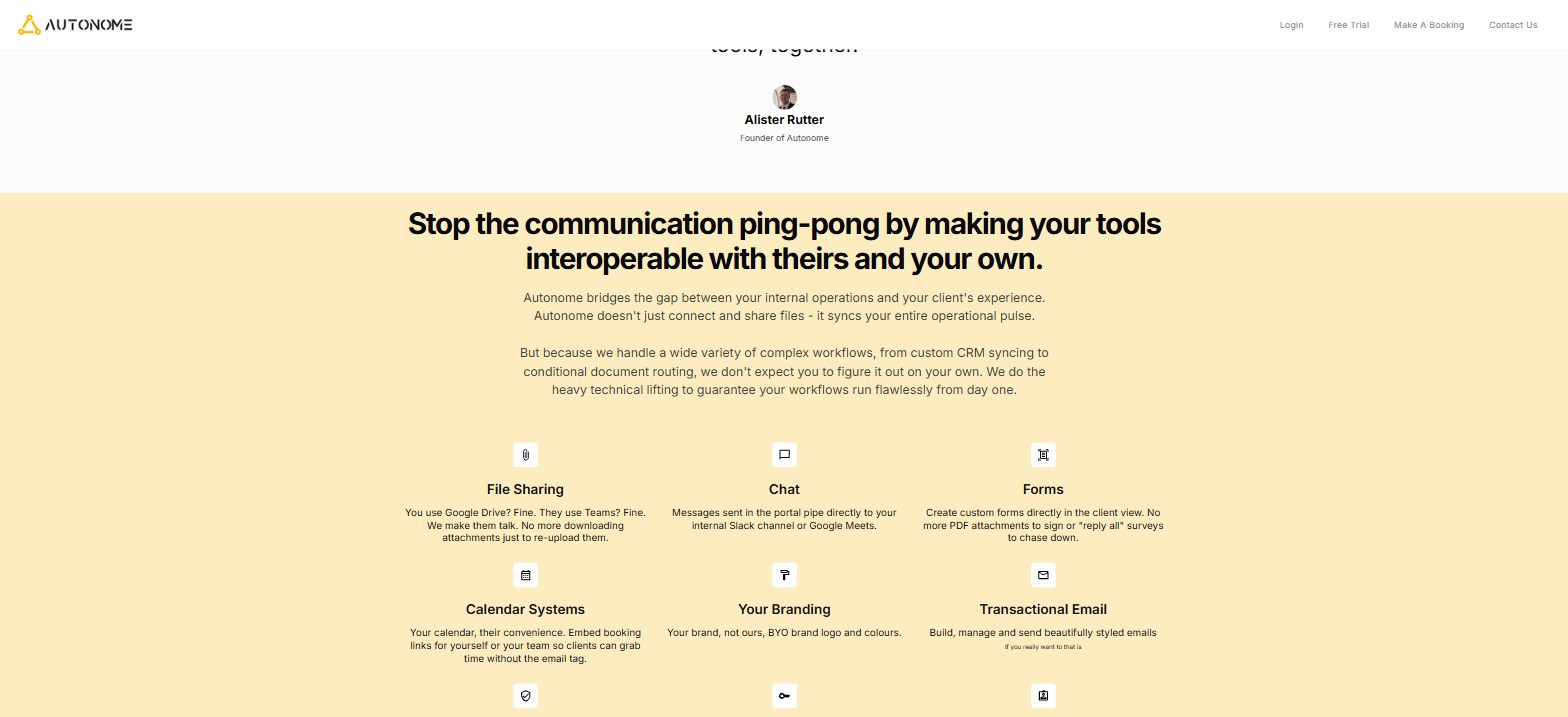
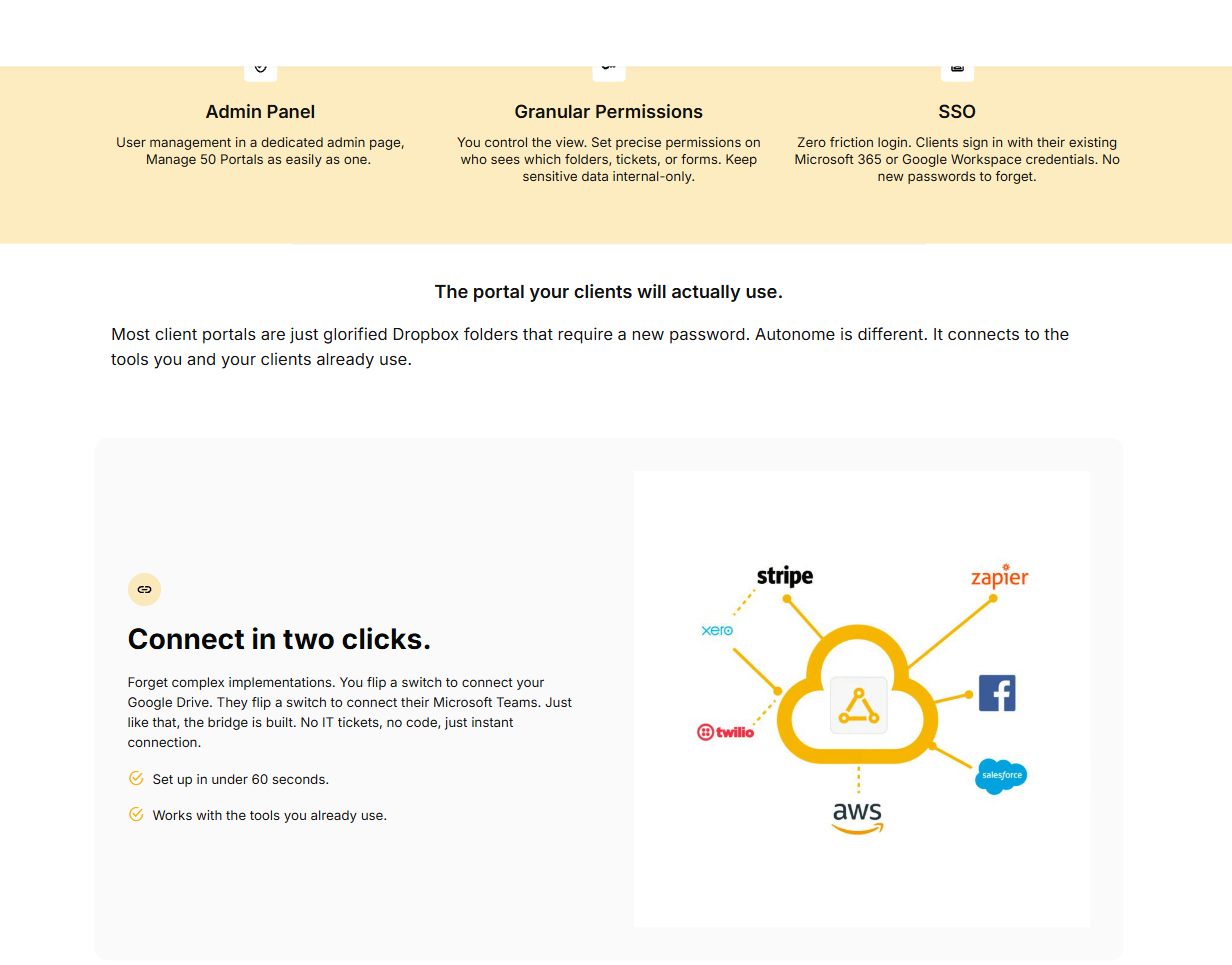
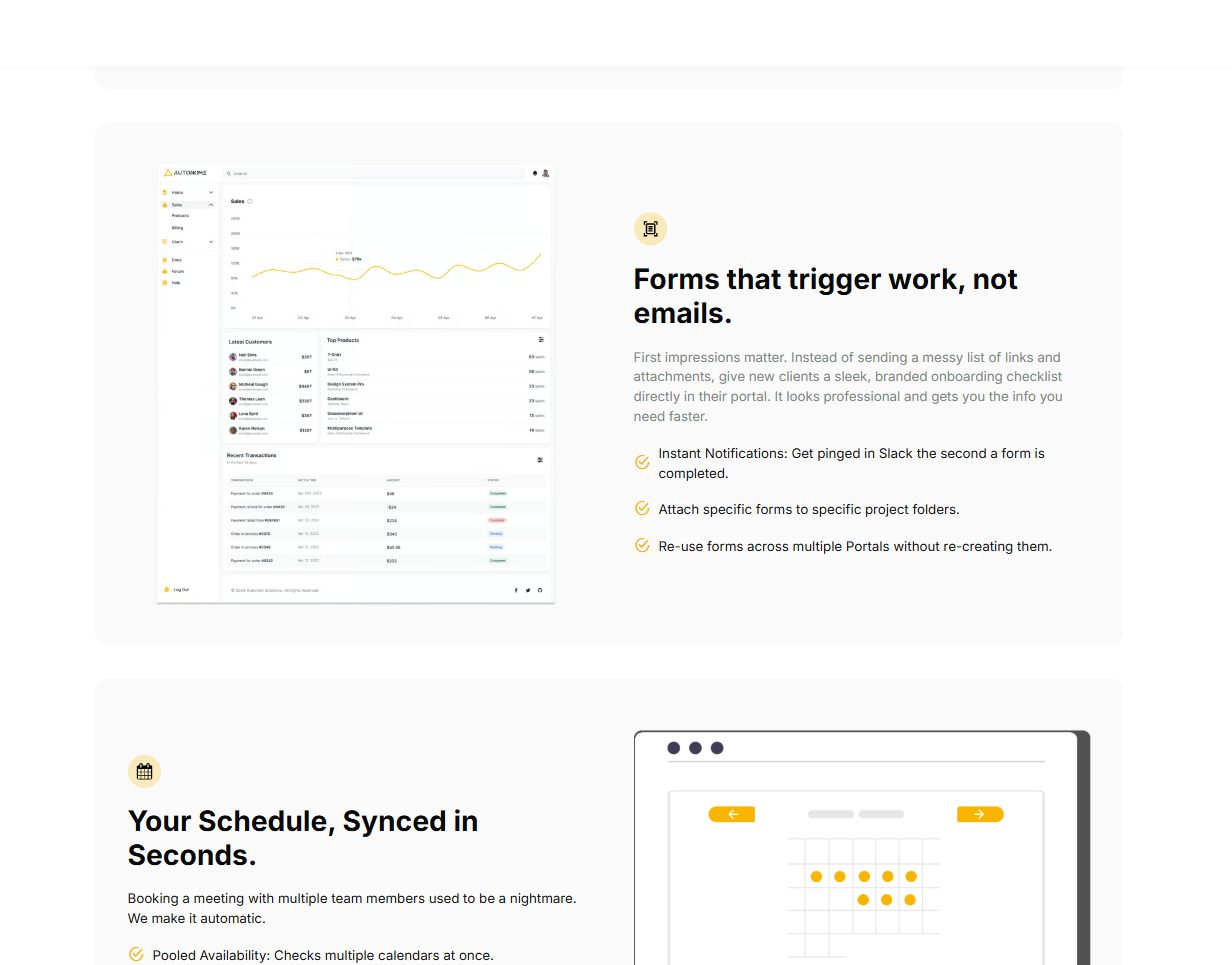
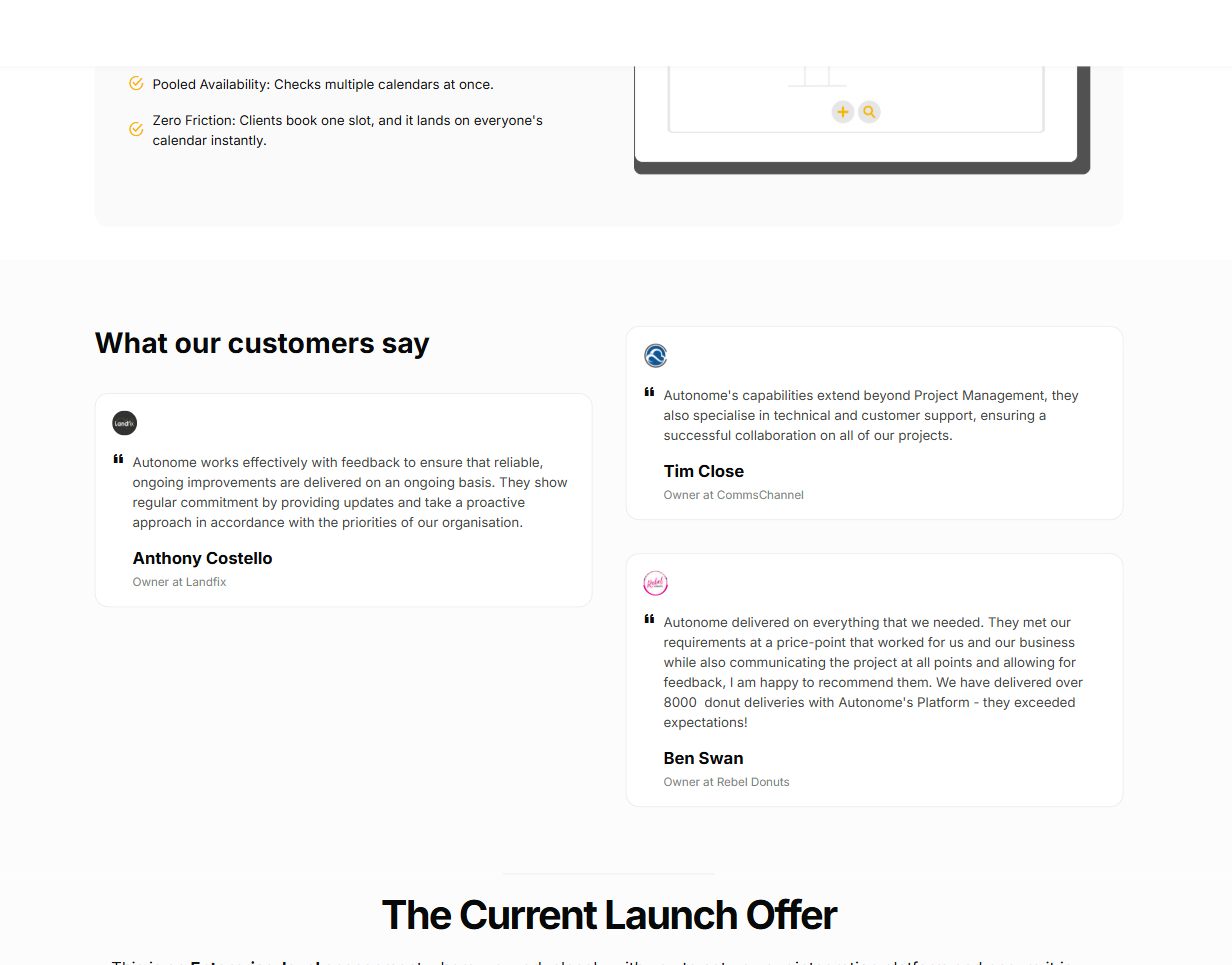
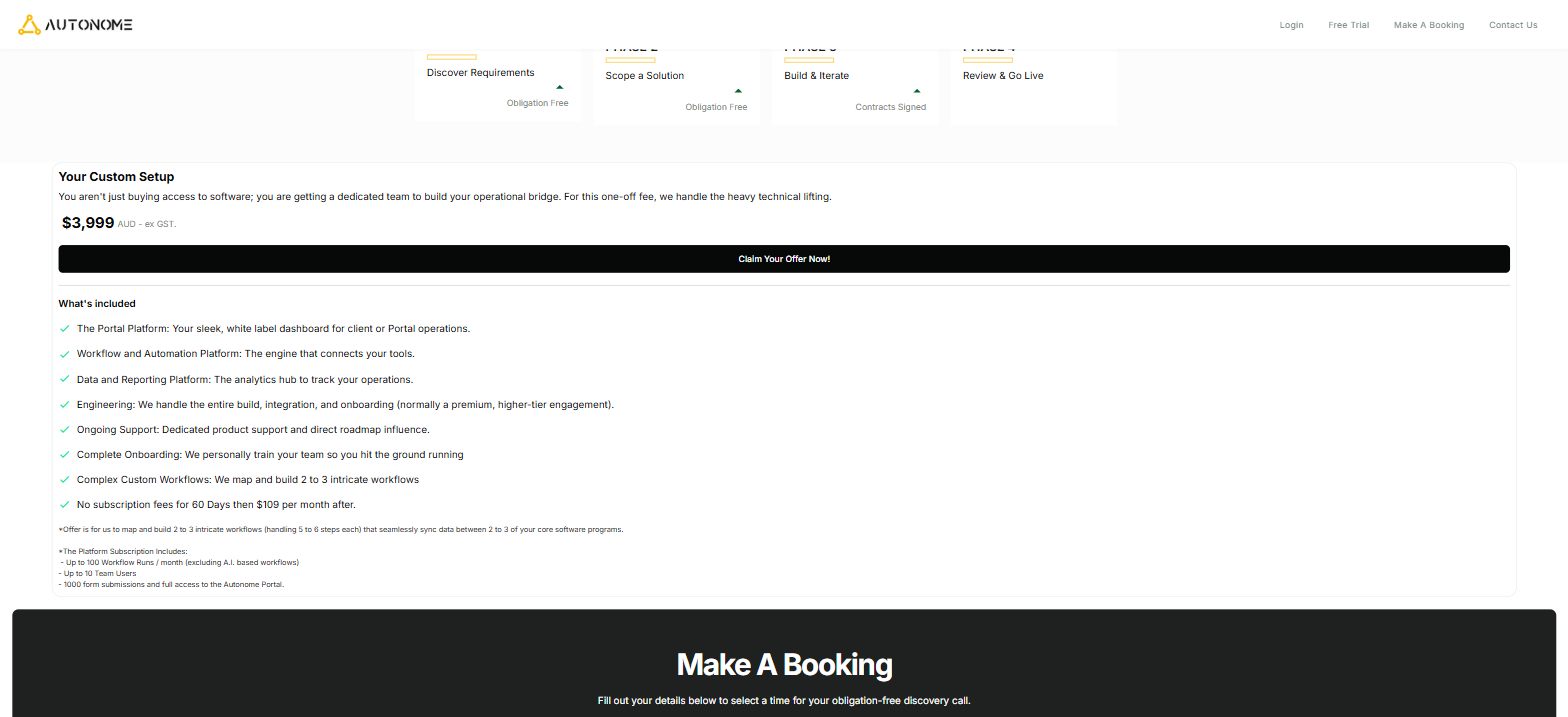
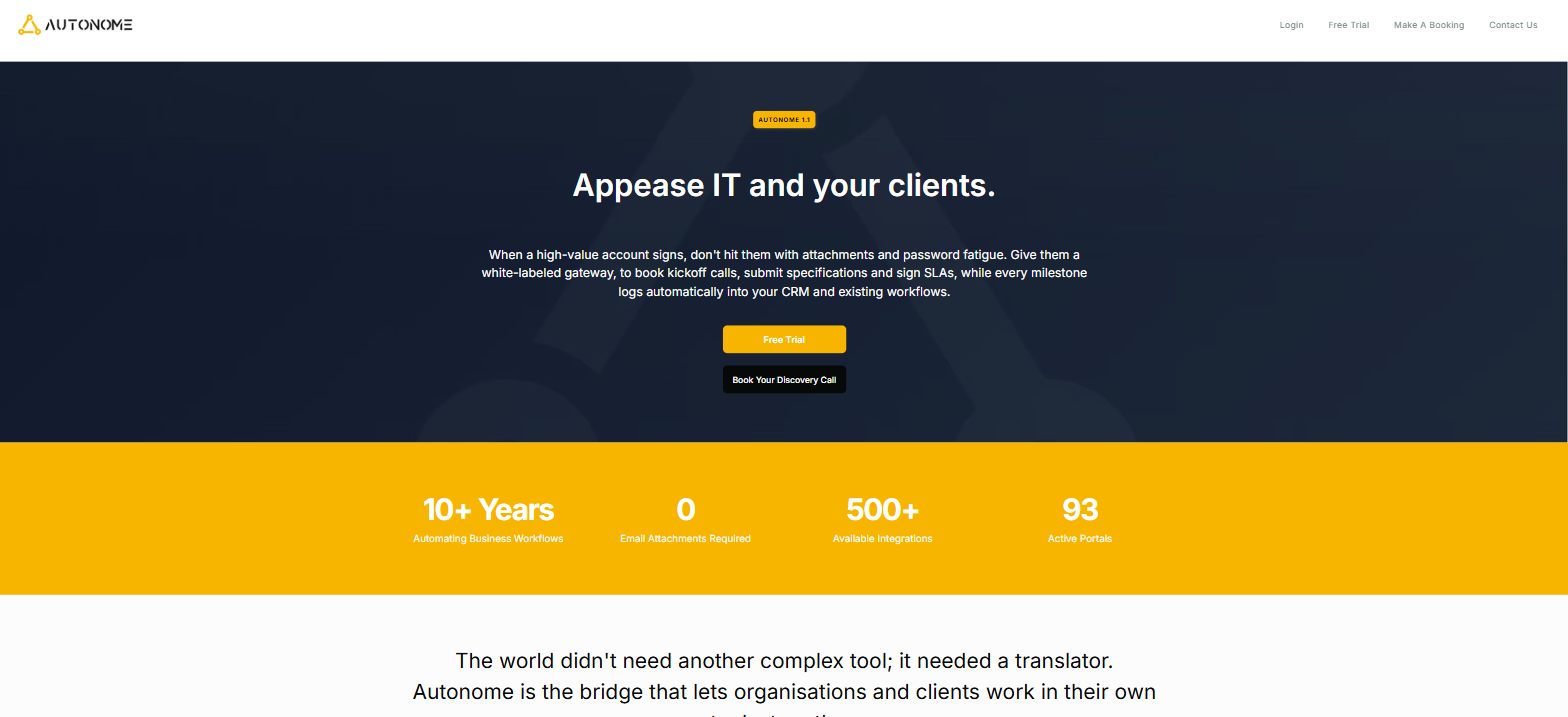
Years of wiring other people's tools together became a product: Autonome 1.1, the first version of the Autonome on this site. It was a white-labelled portal a firm handed its clients to book kick-off calls, send specifications and sign agreements, while every milestone landed in the firm's own CRM and chat.
It sat between Google Drive on one side and Microsoft Teams on the other, and made them talk: shared files without downloads, forms instead of attachments, pooled calendar booking, sign-in with Microsoft 365 or Google, and permissions down to the folder. The same work got Autonome featured by Bubble in its Launch Lab, after two public build challenges, #BubbleBuildsRevenue and #ProfitWithBubble.
It worked, and it had a limit. Every workflow behind a portal was mapped and built by the Autonome team, by hand, for each customer, so every new customer meant more build work for the team.
“The world didn't need another complex tool; it needed a translator. Autonome is the bridge that lets organisations and clients work in their own tools, together.”
- Portals
- About ten, each one its own standalone build rather than a shared platform, set up by hand.
- What it could connect
- More than 500 integrations.
- The launch offer
- A custom setup for $3,999 AUD, with two or three workflows built for you, then $109 a month after sixty free days.
- Who built the workflows
- The Autonome team, by hand, for every customer.
- What it proved
- $100K in revenue through enterprise delivery projects.
2026
The AI switch
AI that builds the workflows the team used to build by hand
The Beta website in 2026
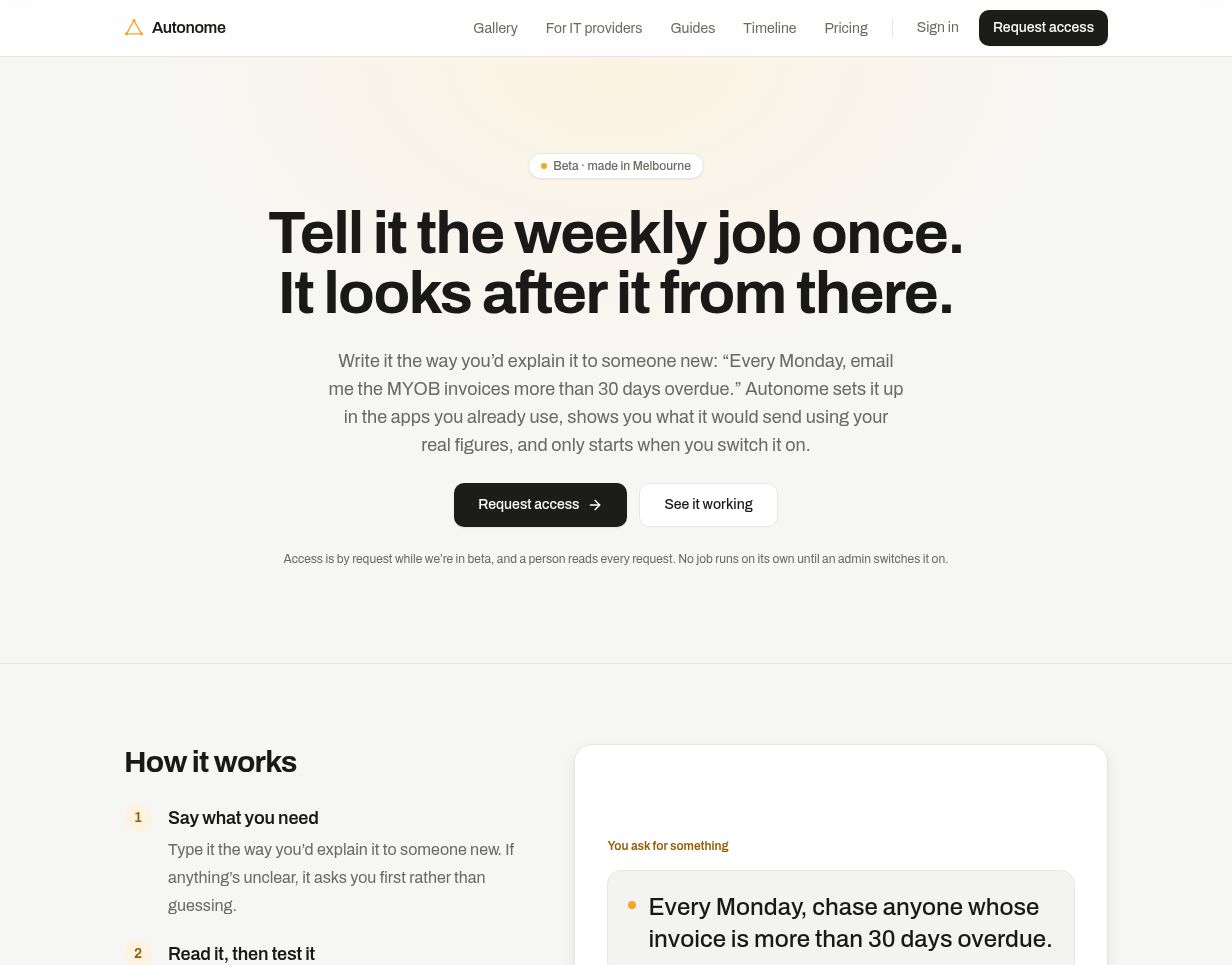
See the whole page (1 more capture)
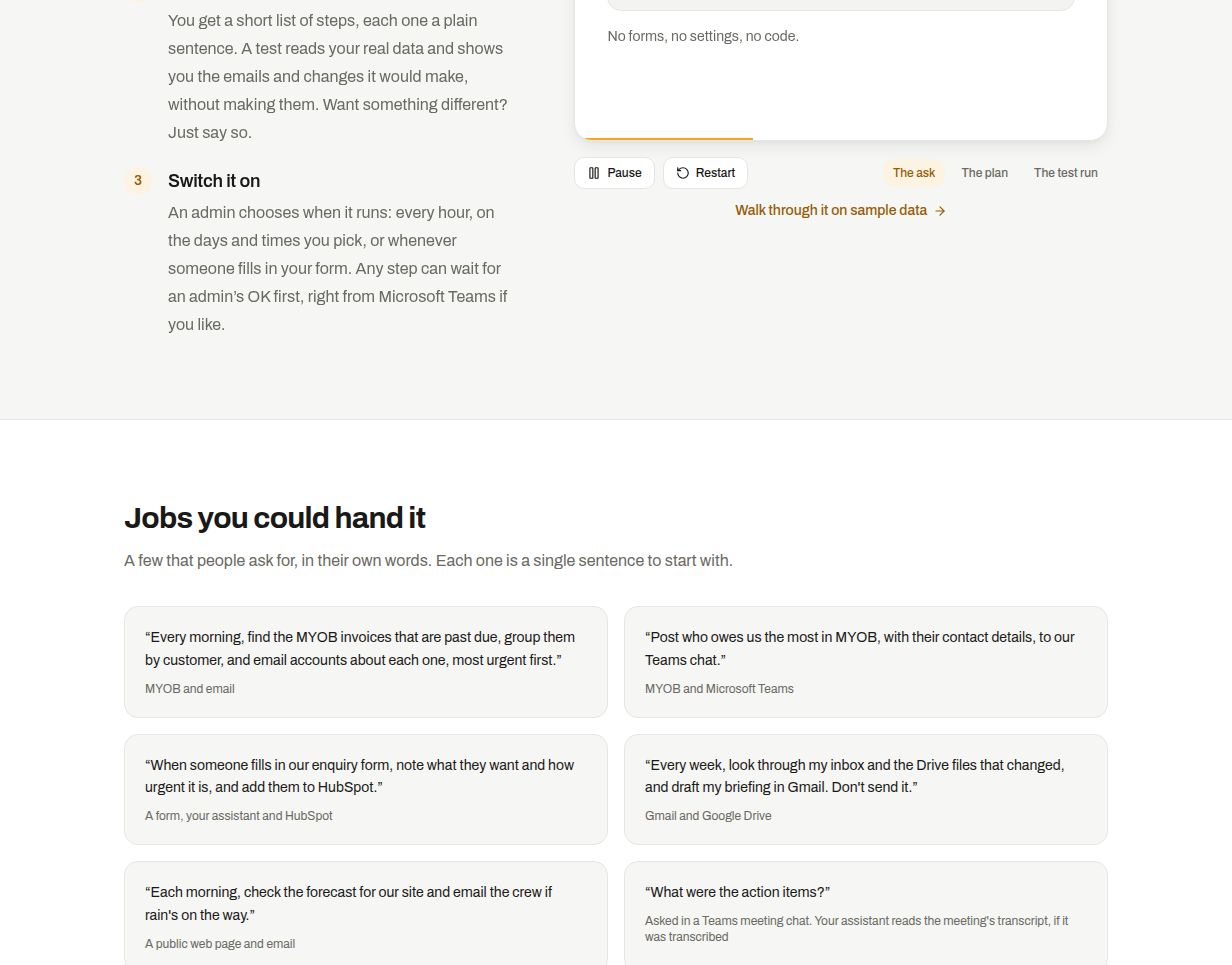
In 2026 Autonome stopped taking agency work and put everything into the product. The workflows the team used to map by hand, you now describe. Write down a weekly office job the way you'd explain it to someone new, and Autonome drafts it as a plan you can read. It shows what it would send using your real figures, and it starts only when you switch it on.
It keeps what the studio years taught: work inside the apps a business already uses, and show a person the result before anything is sent.
The goal hasn't changed since 2020: take the manual work out of the middle. What has changed is who gets to do it.
2026+
Cloud native & Cloudflare OS
From original architecture to Cloudflare OS
The original Beta architecture ran on Windmill, self-hosted Nango, and multi-tenant Python. We learnt that a delegated token is one person's account whatever it is labelled, that anything an agent can write without human approval is a leak path, and that maintaining credentials and runtime plumbing for every tenant is an ongoing burden.
In late 2026, Cloudflare released Cloudflare OS, an open-source AI workspace. Rather than maintain our own plumbing, we moved the engine onto Cloudflare Workflows, Durable Objects, and D1, and deployed our workflows and Microsoft 365 integrations as Cloudflare OS Gatekeepers.
With the architecture proved and 117 golden test scenarios running in CI, Alister now takes on senior IC and technical leadership roles as well as architecture consulting and Cloudflare engineering for Australian businesses.
- Stack
- Cloudflare Workflows, Durable Objects, D1 SQLite, Workers AI, Browser Rendering, Cloudflare Access.
- Upstream base
- Cloudflare OS (Apache 2.0). Cloudflare provides sandboxed apps, agent chat, and gatekeeper discovery.
- What Autonome added
- Microsoft 365 Gatekeeper with per-path ownership checks, Autonome Workflows Gatekeeper with Cap'n Web management UI, human approval queues, and multi-step workflow engine.
- Engineering principle
- Ponytail: solve the real problem with the least code. Honest refusal over fake success.